

Visitors arriving in Lake Harmony today find a peaceful shoreline, wooded hills, and easy access to year-round recreation. Yet beneath this tranquil beauty lies a fascinating Lake Harmony history of ancient geological forces, pioneering innovation, and transformation into one of America’s beloved four-season destinations.
This is the journey of how nature’s power and human ingenuity combined to shape the recreational culture that Lake Harmony travelers enjoy today.
A Landscape Carved by Ice
Long before anyone called this area home, massive forces were reshaping the land. Lake Harmony is a natural glacial lake, formed approximately 22,000 years ago during the Pleistocene epoch when continental glaciers carved through northeastern Pennsylvania. These immense ice sheets gouged valleys, deposited sediments, and created the hydrology that defines the Pocono Mountains today.
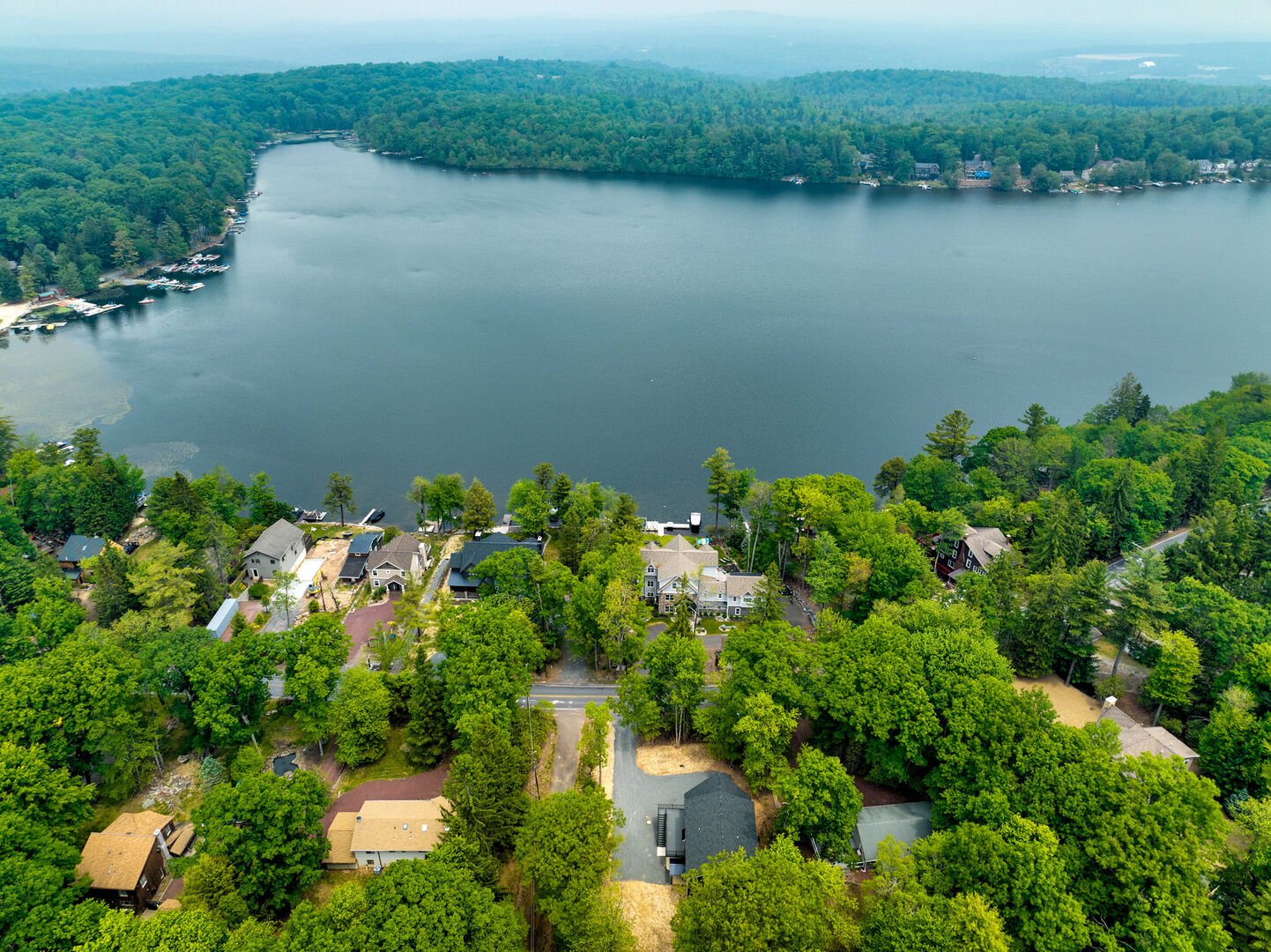
The lake that resulted from these glacial movements spans roughly 2.5 miles in length and covers about 125 acres, fed primarily by underground springs that maintain its remarkable clarity. At an elevation of approximately 1,841 feet above sea level, Lake Harmony sits nestled within the gently rolling, wooded hills characteristic of the Pocono Plateau.
For over a century, people have been drawn to escape the cities for the solitude of Lake Harmony’s clear mountain waters and natural beauty. What began as a remote retreat, originally known as “Big Pond”, gradually developed into a beloved summer destination, with the first vacation cottages appearing over 100 years ago.
The Birth of Pocono Skiing
While Lake Harmony itself is ancient, the area’s transformation into a recreation destination accelerated dramatically in the 1940s. In 1941, the Lehigh Coal and Navigation Company built Split Rock Lodge as a private retreat for company executives, establishing a foothold for hospitality in the region. But it was what came next that would truly define the area’s future.
In 1946, Big Boulder opened and became Pennsylvania’s first commercial ski area. This wasn’t just a local milestone. It marked the beginning of the Poconos’ evolution into a true four-season destination. The slopes that rose above Lake Harmony were suddenly viewed through a different lens, one that saw opportunity in elevation, exposure, and naturally varied terrain.
Big Boulder’s location in the Lake Harmony area made it perfectly positioned to capitalize on the region’s winter potential. But there was a problem: Pennsylvania winters, while cold, weren’t always reliably snowy.
The Innovation That Changed Everything
What happened next at Big Boulder would transform not just the Poconos, but skiing across the entire East Coast. In the 1950s, while working at Big Boulder, an employee named John Guresh developed what would become the first usable commercial snowmaking equipment. In 1950, the first patent application for making snow by blowing water through a nozzle was filed, and by the winter of 1956, the system was perfected and operational at Big Boulder.
This wasn’t just a technical achievement. It was a revolution. Commercial snowmaking meant reliable conditions regardless of what Mother Nature delivered. It meant longer seasons, more consistent operations, and the ability to promise visitors a winter experience they could count on. Big Boulder became the first place where snowmaking was used commercially and successfully, pioneering techniques that are now standard across ski resorts worldwide.
The engineering that made this possible was grounded in the same spirit of innovation and problem-solving that had long characterized the region. The goal was straightforward but ambitious: create consistent winter conditions in an area where weather could vary dramatically from week to week.
Two Lakes, Two Stories
It’s important to note that while Lake Harmony and Big Boulder are intrinsically linked in the region’s recreation story, they are actually two separate bodies of water with different origins.
Lake Harmony is the ancient glacial lake that gives the community its name, a natural wonder that has existed for thousands of years. Big Boulder Lake, on the other hand, was created in 1957 as a man-made reservoir covering 175 acres. This newer lake was specifically designed to provide water for the snowmaking operations on the nearby ski slopes, with the ingenious system allowing much of the water to return to the lake after spring meltdown.
Today, Big Boulder Lake serves dual purposes: supporting winter snowmaking operations while providing summer recreation including fishing, sailing, boating, and swimming for members of the private Boulder Lake Club.
How These Origins Shape Today’s Recreation Culture
The story of Lake Harmony and Big Boulder isn’t just a history lesson. It’s the foundation of how travelers experience the area today. The natural glacial lake created by ancient ice now anchors warm-weather recreation, offering a serene backdrop for fishing, kayaking, lakeside relaxation, and family gatherings. Its spring-fed waters remain among the cleanest and clearest in the Poconos, drawing water enthusiasts year after year.
Meanwhile, the snowmaking legacy pioneered at Big Boulder in the 1950s continues to influence how visitors experience winter in the Poconos. That early willingness to innovate helped create a local culture that values year-round activity, one where skiing, hiking, lake days, scenic drives, and mountain getaways coexist through all four seasons.
When Interstate 80 opened in the late 1950s, it made the Pocono Mountains easily accessible from major cities like New York and Philadelphia. The combination of accessibility, natural beauty, and reliable winter sports transformed the region into a true vacation destination. Jack Frost Mountain joined the scene in 1972, created by the same owners as Big Boulder, further expanding winter recreation options in the Lake Harmony area.
A Destination with Deep Roots
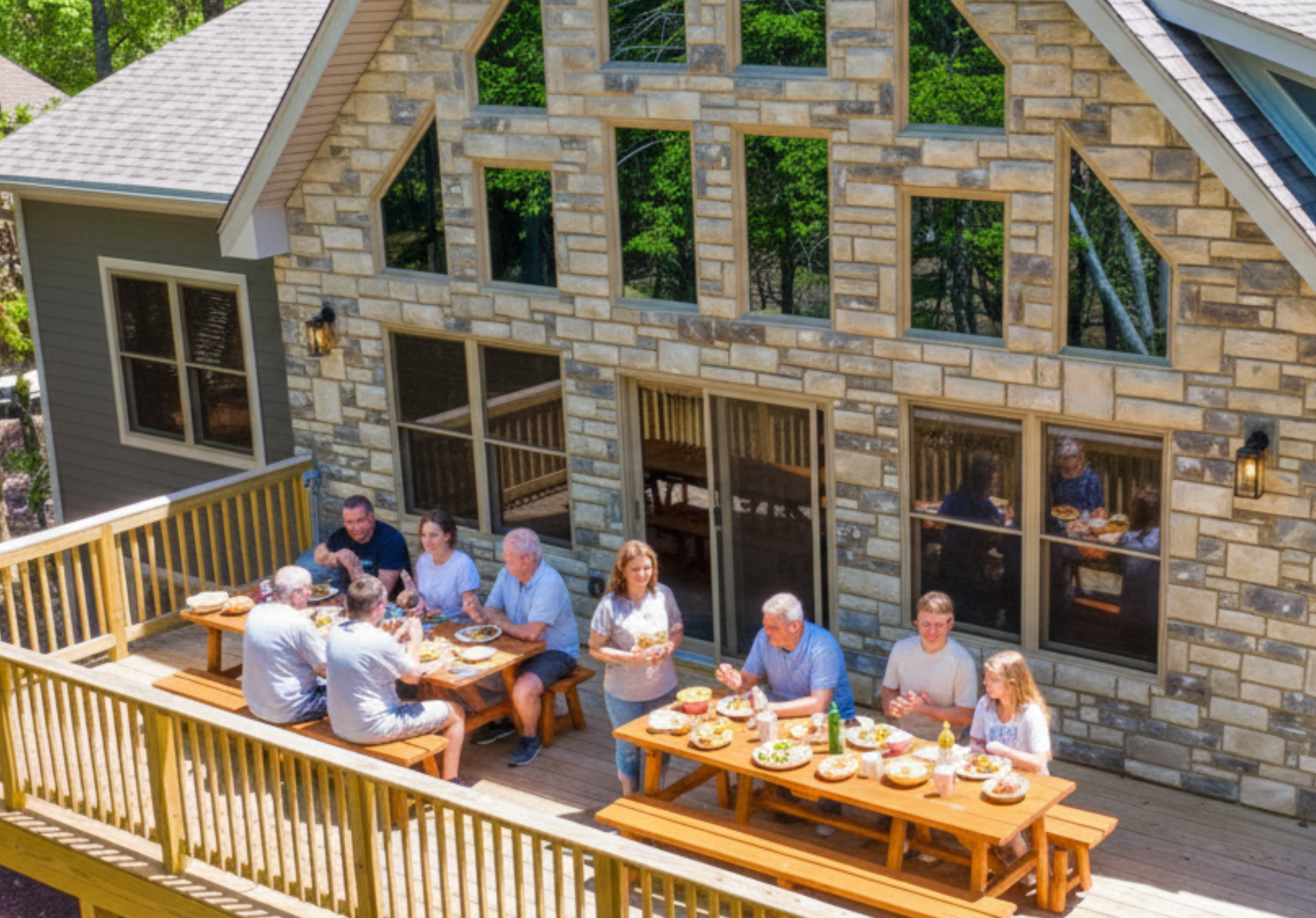
When guests stay in one of our expansive Pocono Mountain Rentals properties today, they’re stepping into a landscape shaped by both geological time and human ingenuity. The transition from glacial formation to pioneering ski area, from pristine natural lake to comprehensive four-season recreation hub, is part of what makes this corner of the Poconos unique.
The area that the Lenni Lenape people called home for over 10,000 years has been transformed by settlers, entrepreneurs, and innovators, but its essential character remains rooted in the natural beauty created by those ancient glaciers. What started as a remote mountain pond has become the center of a thriving getaway community, while the ski area that pioneered commercial snowmaking continues to welcome winter enthusiasts from across the region.
Lake Harmony and Big Boulder’s story is ultimately one of transformation and continuity. Ancient geological forces created the foundation, early 20th-century visionaries recognized the potential, and mid-century innovators solved the challenges that stood in the way. The result is a destination that feels both timeless and dynamic, where the clarity of glacial waters and the excitement of mountain recreation come together in perfect harmony.
For travelers planning a trip today, the lakes and slopes feel like they’ve always been here. But beneath that tranquility and excitement lies a deeper narrative, one written by ice and ingenuity, nature and innovation. And that adds richness to every visit.
Plan your Poconos vacation today to experience this unique blend of natural wonder and recreational heritage for yourself!